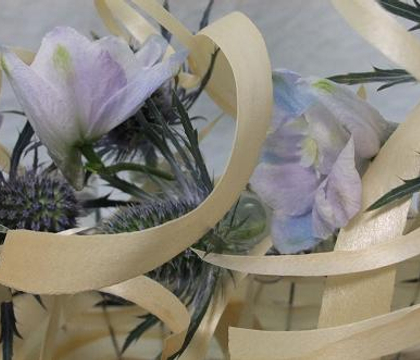
Alstroemeria

The roots of an Inca Lily looks a bit like that of a Dahlia, with a slim finger-like rhizome or group of rhizomes. The flowers grow on long stems ending in an umbel with more than 10 lily or trumpet shaped flowers on.
Alstroemeria
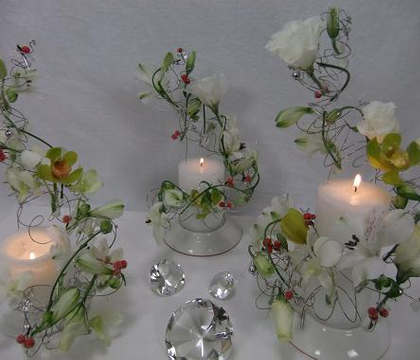
Rocking around three candle trees floral art design with berries, dendrobium orchids, alstroemeria, cymbidium orchids and lisianthus flowers
Common name
Inca lily, Peruvian lily or lily of the Incas
Origin
South America
Colors
The flowers have spots and streaked markings on the petals and the colours range from green to white, golden yellow, and orange to a light apricot, pink, a dark red, bluish purple, and lavender
Varieties
There are 190 cultivars and many hybrids.
Vase life
Up to two weeks as a stem but the flowers last a bit shorter if cut as individual flowers
Scent
Slight floral fragrance
Uses
Long stems are great in line work and the individual flowers are perfect for body flowers. The small flowers look great combined with lilies.
Conditioning
Choose stems that are just opining with all its colour showing but only a few petals turning. Look for undamaged stems and healthy green foliage. If the foliage is yellow it is best not to purchase the flowers as it is a sign of stress caused by flower preservative. Cut the white lower portion of the stem and remove the lower foliage from the stems. Condition in warm water with flower food. Do not remove all the foliage when conditioning because the green leaves help with the uptake of water.
Ansellia Africana

The Leopard orchid is an epiphyte (the whole plant grows above ground, attached to branches of a tree). The pin shaped roots anchor the plant to the tree. To absorb water and nutrients the roots point upwards and form a dense mass around the bulbs to catch water and rotting foliage.
Ansellia Africana
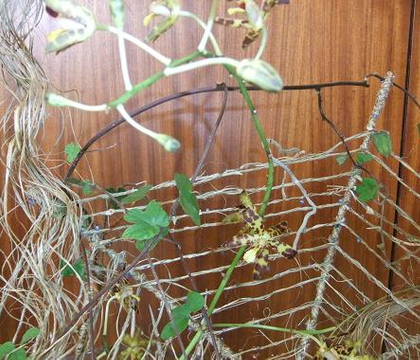
Detail from "Forest Experience". Helderberg Flower Club: Floral Fantasy Competition
Common name
Leopard Orchid
Origin
Tropical Africa- into Namibia, Northern Botswana, Swaziland and in South Africa in the Northern Province, the Lowveld and Kwa-Zulu Natal. In hot dry valleys.
Colors
A mass of green, or yellow flowers marked with brown spots.
Varieties
Vase life
As flowering plant: up to three months.
As a cut flower: Seven to ten days with proper care
Scent
Sweetly scented especially at night
Uses
Cut from stem and use the individual blossoms or use the entire stem in a vase. The Leopard orchid is very popular in traditional African arrangements- it is believed to be a love charm, an antidote for bad dreams and at homesteads it will ward off lightning.
Conditioning
Plant:After flowers fade give the spike a clean cut just above the second or third node to encourage re-flowering. The entire plant can also be conditioned to use in an arrangement by removing the growth medium and submerging in warm water overnight.
Cut flower: Give the stem a fresh cut preferably keeping a section of the main stem attached to the flower stem and condition in deep water. Flowers can be revived by bathing them in lukewarm water.
Design Example:  Forest Experience
Design Example:  ANTI-BACTERIAL
Design Example:  Condition Epiphyte Orchids
Anthurium

Anthuriums can be evergreen or bushy or climbing epiphytes. The inflorescence is a spadix with the uni-sexual blooms on a heart-shaped leathery spathe (a modified bract) on clean flexible stems with a length of fifteen to thirty centimeters. The spadix can take on many forms from club-shaped, tapered, and spiral to globe shaped. The leaves come in many shapes and the upper surface may be matte, semi-glossy, or fully glossy with a texture from leathery to fragile and papery.
Anthurium
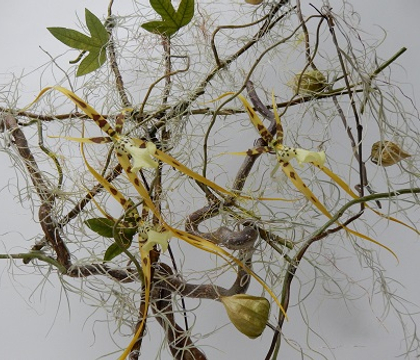
The Floral Trends Design Group Old and New Demonstration
Common name
Anthurium, Tailflower, painters palette, Flamingo flower
Origin
Central and South America. Most species occur in Panama, Colombia, Brazil, Guiana Shield and Ecuador.
Colors
There are several hundreds of colours available, including bi-colours and novelties. Anthuriums grown for the florist trade generally have a coloured spathe and spadix. The spadix can be white, green, purple, pink or a combination. The spathe may be single coloured- white, yellow, green. or multicoloured including burgundy and pure red. Anthurium berries range from red to black and may also be bi-coloured or shaded.
Varieties
More than 800 species are documented of which approximately 200 varieties are available in the cut flower industry.
Vase life
Ranging from seven to twenty (or more!) days.
Scent
The flowers give off a variety of fragrances, each attracting a variety of specific pollinators
Uses
I enjoy using the glossy green foliage and the beautiful almost red roots in designs. The flowers are thirsty and prefer larger tubes or vases. I love the miniature Anthuriums.
Conditioning
Give the stem a fresh cut removing about four centimeters and place in deep fresh water and flower food.
Bupleurum rotundifolium:

Beautiful green per-foliate leaves that reminds of eucalyptus with multiple branches on each stem. Five to seven tiny yellowish green flowers at the end of each stem. Flowers are available year round
Bupleurum rotundifolium:
Bupleurum curl around the parasol of my In an Oriental Manner design
Common name
Bupleurum, Thoroughwax
Origin
Southern and Central Europe and Asia. Today the flowers are mainly exported by Kenya, South Africa, Zambia and Zimbabwe.
Colors
green and yellow and yellowish green
Varieties
Very few varieties are available as cut flowers
Vase life
seven to ten days
Scent
slight floral fragrance
Uses
Traditionally Bupleurum was used only as a filler flower
Conditioning
Choose stems that are firm, foliage that are showing no signs of stress and just over half of the tiny flowers open. Remove any foliage that will fall below the conditioning water line. Give the stems a fresh cut. Condition in warm water with dissolved flower food.
Design Example:  In an Oriental Manner
Ceropegia woodii

The trailing vine is an evergreen succulent that can grow up to 4 meters in length. It has beautiful heart shaped leaves spaced out to look like a string of beads.
Ceropegia woodii
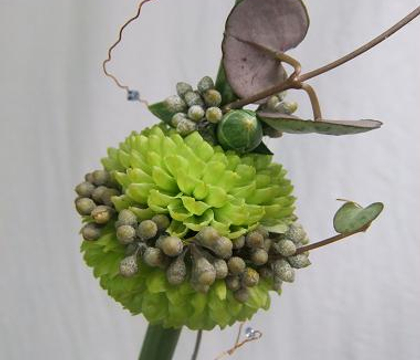
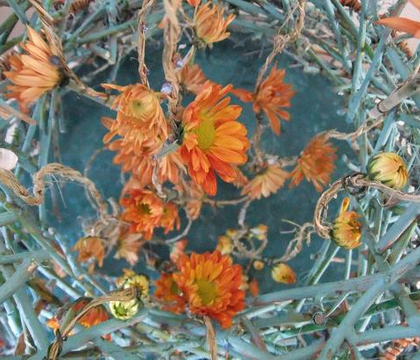
Pompon Chrysanthemum pom-poms and strands of Rosary vine for my floral lariat necklace in the Canadian Florist Magazine
Common name
Rosary vine, Chain of Hearts, Collar of hearts and String of hearts
Origin
South Africa, Swaziland, Zimbabwe
Colors
Leaves are variegated or either deep green or pale green (underside pinkish to bright purple) depending on the amount of sunlight the plant is exposed to and the flowers are white or purple in colour
Varieties
New varieties have been selected but mostly for their beauty as houseplants rather than for the cut flower industry.
Vase life
As a pot plant the trailing stems will continue to grow and develop side shoots. Cut for design work the leaves will last as long as most succulents without water and will root if designed in water over time.
Scent
None
Uses
The leaves look fantastic in detailed work. Long trailing stems add movement and can also be used to bind stems.
Conditioning
Most designers grow the plants and cut the long strings as needed. Water the plant only when dry and do not allow the plant to stand in water. Keep the plant in a warm area (above 15’C) and in partial shade.
Design Example:  In a nutshell
Design Example:  Grow Love
Design Example:  Bubbly New Year’s Sparklers
Design Example:  Pick-Up Sticks
Design Example:  Grown Glamour
Design Example:  A Twist on Tradition
Design Example:  Just Right! Floral Art demonstration: Too Hard!
Design Example:  Turning of the leaves
Design Example:  Everlasting
Design Example:  Delicate twig and rosary vine garland
Design Example:  Carry the comfort of winter textures with you into spring
Design Example:  Designing Body Blooms
Design Example:  Steeling yourself against stealing creativity
Design Example:  A snowball’s chance
Design Example:  On the first warm day in May
Design Example:  Designing a Feeling
Design Example:  Diamond Jubilee Waterfall
Design Example:  So this is Christmas, I hope you had fun…
Design Example:  Spring Clean
Design Example:  Three Drops of Floral Chocolate
Design Example:  'Tis the Season
Chrysanthemum

The bloom forms are defined by the way in which the ray and disk florets are arranged. Flower heads stand in plumes, clusters or single heads on woody stems with many branches. Slightly fuzzy, grey-ish green leaves varying from dentate to lobed shaped.
Chrysanthemum
Chrysanthemum Design: the Floral Hour glass was made as part of my wax series
Common name
Chrysanthemum or "mums"
Origin
Chrysanthemums were first cultivated in China as a flowering herb as far back as in the 15th century. A medicinal tea is still brewed from the flowers.
Colors
Many variations of almost all shades.
Varieties
Chrysanthemums have many classifications: irregular, regular, thistle, in curved, decorative, pompon (yes, that is how you spell it!), single, semi-double, anemone, spoon, quill, spider and brush. Grown year round in tunnels to supply flower lovers.
Vase life
Vase Life Seven to ten days or even longer.
Scent
Spiced can even be used as a harmless insecticide
Uses
Many designers considered the flowers a bit over-done but in 2010 Stein Are Hansen (Norway) used Chrysanthemums in his winning entry for the Interflora World Cup Competition entitled "Flowers of the Orient". Today Chrysanthemums are trendy again. The chrysanthemum plants have been shown to reduce indoor air pollution by the NASA Clean Air Study
Conditioning
Chrysanthemums have a woody stem. Remove the foliage that will be under the water line while conditioning. The foliage helps the flowers to hydrate so do not remove all the foliage while conditioning. Cut the stem at an angle and place in warm water with dissolved flower food
Design Example:  Designing Body Blooms
Design Example:  Ground Breaking
Design Example:  In an Oriental Manner
Design Example:  Wire hairpin needle for threading flowers
Design Example:  Pompon Chrysanthemum, bud and eucalyptus pom-poms
Design Example:  Flower Girl’s Butterfly Net and Ring Bearer Bug Box
Design Example:  Snowmums
Design Example:  The power of reinvention
Design Example:  SHAPE
Design Example:  Kitchen Garden
Cyclamen

Interesting "upside down" flower at the end of long tubers with long petals pointing up and beautiful heart shaped, fleshy foliage
Cyclamen
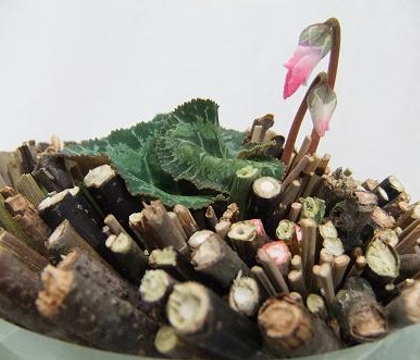
Cyclamen flower bud and leaf in my Lean design
Common name
Cyclamen, English sowbread
Origin
North Africa, Somalia, Europe and the Mediterranean region east to Iran
Colors
White, bright pink, red or purple flowers also bi- and multi-coloured
Varieties
There are 23 species of perennials but florists most often use Cyclamen Persicum in their designs
Vase life
Up to 7 days as cut flower and longer as flowering plant
Scent
Sweet scented
Uses
Beautiful as flowering plant or growing design or use the foliage and flowers in designs where you require shorter stems.
Conditioning
Water only when the plant feels dry and do not pour the water over the crown of the plant. Keep in bright but indirect light. See the Tutorial on how to harvest Cyclamen flowers and foliage
Design Example:  Lean
Design Example:  Harvesting cyclamen flowers and foliage
Design Example:  Turning of the leaves
Cymbidium

The waxy flowers have a scooped lip (or nose) giving them their common name of a boat orchid and grows with about 8 to 10 flowers on each tall spike
Cymbidium
Cymbidium orchids for my Designing your way to profits article that was featured in the Canadian Florist Magazine
Common name
Cymbidium, Boat Orchid
Origin
Historically grown in India but are now cultivated in both the Southern and the Northern Hemisphere
Colors
Green, white, cream, yellow, red, pink, and most amazingly brown
Varieties
You can purchase large or small varieties of Cymbidiums. The price of the stems will be determined by the size of the flower head and how many flowers are growing on the spike. If you are buying a Cymbidium plant the price will also vary according to the amount of flowering spikes on the plant. Cymbidiums are popular with growers and new varieties are added almost daily. As cut flowers they are sold according to colour rather than specie name.
Vase life
I have had flowers that last up to five weeks. But usually two weeks to a month depending on size and conditions.
Scent
Faint floral scent
Uses
Some species are edible but mostly the flowers are cultivated as cut flowers. Very popular in bridal and competition work because they are so long lasting and surprisingly hardy. It is more than just slightly extravagant but I love to weave with the leaves. If you do want to weave with cymbidium leaves make sure only to harvest the outside two leaves not to damage the bulbs.
Conditioning
Take the stem out of the plastic test tube it was shipped in. Give the stem a fresh cut and hydrate in water. Make sure you support the stem to allow the water to reach the upper flowers. Temperature fluctuations will cause the buds to drop. The flower petals bruise easily so do not over handle.
Design Example:  Spring Clean
Design Example:  A Floral Fable: Colour Design
Design Example:  Three Drops of Floral Chocolate
Design Example:  Designing Your Way to Profits
Design Example:  its a wrap!
Design Example:  Happy Easter!
Design Example:  Boat Orchids
Design Example:  Apples and Orchids
Design Example:  Floating Boat Orchid
Design Example:  Cymbidium Friendship Arrangement in a Papier Mache Container
Design Example:  Placing orchids in test tubes
Design Example:  Jack Frost’s Christmas stocking
Design Example:  Rocking around Three Candle Trees
Design Example:  Mossy Twig handbag
Design Example:  Center the more adventurous design ideas on your centerpieces
Design Example:  Cinderella Spiral Pumpkin from Midelino Cane Coils
Design Example:  Skipping stone
Design Example:  Leaves by Hundreds came
Design Example:  Designing with Mother Nature
Design Example:  Hide-and-go-peek
Design Example:  Avoiding Decision Fatigue
Design Example:  Design-time saving tip sheet for a demanding Mother’s Day
Design Example:  Weaving with Flax
Design Example:  Veiled Sunshine:50th Anniversary of the South African Orchid Society at the Cape Town Convention Centre.
Design Example:  A Floral Fable Design demonstration Floral Art Structures
Design Example:  A Floral Fable Design demonstration at the Capilano Flower Arranging club
Design Example:  The power of reinvention
Design Example:  The last Vine Wreath
Delphinium

The clusters of soft, almost translucent blossoms grow on tall spires of up to 1.2m high.
Delphinium
Detail of my Just Right! design done for the Floral Art demonstration at the BC Floral Art Society club meeting
Common name
Delphinium or Larkspur (a smaller variety)
Origin
China and Eastern Europe
Colors
White, blue and purple, pink (and orange, though it is hard to find on a reliable basis) with various shades in between. Some with white and some with dark centers.
Varieties
Floral designers mainly use three varieties: Blue Belladonna Delphiniums, the smaller larkspur that grows as an annual from seed and Elatum varieties, which are hybrids
Vase life
Surprisingly long lasting: almost two weeks.
Scent
Faint floral scent
Uses
Pick the individual blossoms and use in designs for body flowers or add the long stems to add height to a design.
Conditioning
Some of the blossoms will drop naturally from the stems but you can minimize this by rinsing the stems and add fresh water with flower food. This will also help keep the petal colours from fading. Turn the stem upside down to make sure the entire hollow stem is filled with water and to reduce the chances of an airlock forming. Fill the hollow stem with room temperature water. Gently tap the stem to release any bubbles. Either plug the stem with cotton wool or hold your thumb over the water filled hollow until it is in the water.
Dracaena sanderiana

In nature it grows as understory plants in rain forests. It is an upright shrub growing up to 1.5 meters tall, with slender stems and flexible strap-shaped leaves fifteen to twenty five centimeters long. As a cut flower stem or houseplant it is pruned and cultivated to resemble a miniature bamboo.
Dracaena sanderiana
I made a Shishi Odoshi tipping fountain out of PVC pipe (sprayed green) for my Desalination demonstration design. Lucky Bamboo in front, in the vase was used to catch the water and illustrate fresh water
Common name
Lucky Bamboo, Ribbon Dracaena, Belgian Evergreen, Ribbon Plant
Origin
It is native to Cameroon in tropical West Africa. It is marketed as a decorative Chinese plant but is unrelated to Bamboo and not native to Asia.
Colors
Most plants we purchase are a healthy dark green but a variegated white and green is also available.
Varieties
Numerous cultivars are sold as houseplants. Small straight stems or twisted long stems propagated from cuttings, usually with its roots in water. Dracaena sandriana can flower Autumn, Winter or early Spring.
Vase life
Can last for a few years if you change the water every two weeks.
Scent
None
Uses
Often used in Feng Shui designs. Look great on its own or placed with round pebbles. Twisted shapes can be produced by rotating the plant to face the sun- this will take a long time
Conditioning
Place in a bright position with indirect light- direct sunlight can cause the leaves to turn brown. A lucky bamboo can also be used completely submerged in water for a few months and the life can be extended by allowing at least a few leaves to grow above the water line.
Echiveria

Compact rosette shaped succulent
Echiveria
Echiveria wrist corsage.
Common name
Echiveria, Hen and chicks
Origin
Northern South America, Mexico
Colors
Grey green to dark burgendy, depending on the variety.
Varieties
It is part of a large genus of succulents
Vase life
Will last well even without a water source in design work. As a plant it can lose its lower leaves during winter leaving the plant with a longer stem rather than a compact ball rosette shape
Scent
None
Uses
Beautiful to use as you would flowers in tied designs or arrangements. Terrariums with small succulents also look great. I like to include them in corsages and body flowers.
Conditioning
Most designers grow the plants and cut the rosette or arrange the entire plant. The plants are drought resistant. Propagate the plant by placing the lower leaves in soil to root
Equisetum

Rigid hollow, jointed shoots resemble miniature bamboo and colonize rapidly
Equisetum
Equisetum dome made for "One Singular Sensation". Floral Trends Design Group Inter-club Mini Show: Old and New
Common name
Scouring Rush, Horsetail, snake grass, puzzle grass
Origin
Equisetum is near- cosmopolitan, being absent only from Antarctica. Equisetum is a .living fossil., as it is the only living genus of the entire class Equisetopsida, which, for over one hundred million years were more diverse and dominated the understory of late Paleozoic forests. Some Equisetopside were large trees reaching to thirty meters tall.
Colors
Bright green with black horizontal bands
Varieties
Over twenty five species
Vase life
Dries to a natural light green out of water. If used in a vase the stems will root, over time,and can be planted.
Scent
None
Uses
Knot one end of the stem to create a natural flower "test tube", bend it, plait it, press LED lights into it, press a wire through it to curl and shape it (as seen in photo above). Simplistic and distinctive in designs.
Conditioning
Give the stem a fresh cut and hydrate in warm water.
Eryngium

70cm to 1m tall plants with spiky, dentate leaves and flower heads with spiny bracts that resembles thistles.
Eryngium
Detail of my Frightis Botrytis! design done
Common name
Sea holly
Origin
Siberia through to the Southern parts and all the way to Central Europe
Colors
Metalic blue, silver and grey
Varieties
Due to its popularity as a cut flower, the genus Erynguim has more than 200 species ranging from the very spiky “Blue bell” to the large “Super Nova”
Vase life
Up to two weeks
Scent
None
Uses
I love how edgy the flowers look especially when combined with metal or wire. Traditionally used as a “filler flower” but lately it has become popular and has even been seen as a focus in bridal designs and body flowers.
Conditioning
Sea holly prefers cooler temperatures. Condition overnight in deep cold water
Eucomis

It is part of the Hyacinth Family. The flowers grow from a 8-10cm deciduous, summer growing bulb. The cylindrical inflorescence (peduncle) is at the end of a thick waxy stalk, crowded with up to 130 star shape flowers with a tuft of leaf-like bracts at the tip.
Eucomis
My Growing Gratitude design with a tray woven from green passion fruit vines and single eucomis flowers and "pumpkins" made from sticks and autumn leaves
Common name
Pineapple flowers or pineapple lilies, the Afrikaans names for the flowers are Wildepynappel or Krulkoppie and the Zulu name is Umathunga
Origin
South Africa, Botswana, Lesotho, Swaziland, Zimbabwe and Malawi. Also North America and Euro Asia
Colors
White, yellowish-green, coral to deep pink
Varieties
Eleven species are available
Vase life
The bulb plants will bloom for a few weeks or last up to 14 days in a vase. The seeds and fruits that form on the stem will also last up to 30 days in a vase.
Scent
Sweet floral
Uses
Great showy flower spikes and has become fashionable in contemporary designs to insert a single flower into a design
Conditioning
Condition in deep cool water with added bulb flower food.
Eustoma

They are biennial, growing 15 to 60 cm tall, with blue green, slightly succulent leaves, and large single or double funnel shaped flowers. The petals are delicate and almost transparent. At the end of the long straight and bendable stems the flower bud is enclosed by long, narrow green sepals.
Eustoma
Lisianthus and Rose
Common name
Lisianthus, Texan Poppy, Texas Bluebell, Tulip Gentian, Prairie Gentian
Origin
Northern South America, Mexico, Caribbean and since 1980 the range has developed considerably due to eustomas being cultivated in the Netherlands
Colors
green, white, cream, dark purple, lilac, pink, and bi-coloured
Varieties
New varieties improve on vase life and are increasingly popular as a cut flower.
Vase life
Seven to ten days with proper care. Avoid bright sunlight and humidity.
Scent
None
Uses
Beautiful small buds that look like tiny trumpets. Long stems can be woven into a design. Spiral in a glass vase. Although soft,the stems are still strong and can stand up in a vase.
Conditioning
Cut the stem at an angle and remove all the foliage that might fall below the conditioning water line. Place the stems in warm water with dissolved flower food for about two hours before designing.
Gerbera

The rosette shaped flower head stands like an open umbrella on a long (about 30cm) slightly fuzzy, leafless stem.
Gerbera
Floral art demonstration design with Gerbera and twigs.
Common name
Transvaal Daisy, Gerbera Daisy, Germini
Origin
South Africa
Colors
red, pink, orange, white, cream, brown, purple, lilac, and bi-coloured with black, yellow or green eyes.
Varieties
Small germini or mini daisies are about 6cm in diameter and larger gerberas are between 12 and 16cm in diameter. Also available in either single or double varieties.
Vase life
Two to three weeks depending on the variety and conditioning
Scent
None
Uses
Beautiful flower to use when you want to make a colourful statement.
Conditioning
Support the long stems and avoid handling the flower stems to prevent damage. Gerberas are very sensitive to bacterial growth. Take extra care to arrange the flowers in shallow, clean water and vases to avoid bacterial growth. Replace the water often and rinse the stems. Give the stems a fresh cut. Condition in fresh water with dissolved flower food.
Gladiolus

Gladius is the Latin word for small sword. The bulbous Gladiolus grows upright with thin sword like leaves planes and showy one sided flower spikes
Gladiolus
Detail of my Blue Harlequin design. An ink blue Gladiolus composite flower nestles snugly between two lily grass cones that curve nimbly into a crescent shape.
Common name
Gladiolus, Sword lily, Corn Lilies, gladioluses, glads, plural: gladioli
Origin
South Africa, Tropical Africa, Asia and Mediterranean Europe
Colors
Green, white, cream, yellow, red, pink, (or combinations thereof) and most amazingly ink blue
Varieties
There are more than 260 species of Gladiolus with multiple hybrids that are available to the cut flower industry.
Vase life
One to two weeks
Scent
Faint floral scent
Uses
Excellent line flower or cut the spike for smaller individual flowers. The flower breaks up neatly and can be rolled together to create a spectacular composite flower
Conditioning
Look for long stems that are cut cleanly with healthy green leaves. The bottom most flowers should just begin to open and the next few buds should already show their colour. Give the stem a cut and peel away the bottom most leaves. Place the flowers in warm water (with flower food). The top most closed buds will always point to the sky (negative geotropism) this can ruin the line of your design, especially when arranged vertically. Condition the flowers upright if you want the sword shape and snip away the top most buds if you want to keep the closed buds from curving up or condition the flowers leaning to add them at an angle to your design
Gypsophila

Growing up to 120cm tall on thin but sturdy stems, the flowers are produced in large inflorescences that are either dense or open and are topped with the tiniest of flowers (about 3-10mm in diameter).
Gypsophila
I used mainly Gypsophila and twigs to create my fantasy Intimate dinner for two competition design.
Common name
Baby’s breath, soap wort, Gyp, Gypsophila
Origin
Europe, Asia, North Africa
Colors
white or pink
Varieties
Over 100 species grown both for the cut flower market and as ornamental plant
Vase life
Seven to ten days with proper care. Dries well
Scent
slight floral fragrance
Uses
Traditionally Gypsophila was only used as a filler plant giving it a reputation for being over used and rather a cliche. Contemporary designers are now designing with large amounts of these tiny flowers to create light and cloud-like designs. The roots are also valued in the culinary world and it is used to make desserts Turkey.
Conditioning
Plants prefer full sun and well drained soil. Condition the cut flowers in warm water. To encourage the buds to open cover the flowers with a polyethylene sheet to raise the moisture level or place in a humid warm environment such as a bathroom.
Design Example:  Sticky Shooting Star
Design Example:  Wish Upon a Dandelion Star
Design Example:  Tying the knot
Design Example:  So this is Christmas, I hope you had fun…
Design Example:  Intimate Dinner For Two- Table Setting Competition Class
Design Example:  Happy Easter!
Design Example:  there’s a feeling
Design Example:  A snowball’s chance
Helianthus anuus

Large round, flat flower heads most often with dark centers (where the seed develops) and circular petals that follow the sun. Grows on tall, thick, hairy dark green stems with large heart shape leaves.
Helianthus anuus
Nature's Treasures, A Floral Art Exhibition at D'Ville Shopping Center Durbanville Floral Carpet with the members of the Durbanville Flower Club. For the mid section I used roses, sunflower heads, bark, potting soil and foliage.
Common name
Sunflower
Origin
America especially the Southern and Western regions.
Colors
most popular sunflowers are the “moonlight” variety with its dark center and sunny yellow petals but you will also find brown, orange, rusty red and a striking dark red purple
Varieties
You will find both large (20-35 cm) and miniature (10cm) sunflowers. Most varieties cultivated for the cut flower market sheds less pollen than those grown for the seeds.
Vase life
Sunflowers are thirsty and if you keep them well hydrated it will last for a week. They also dry well.
Scent
If you are familiar with sunflower oil you will recognize it by the scent
Uses
Sunflowers are very dominant and definitely attract attention. It has become fashionable in contemporary design to remove the bright flower petals and work with the dark center of the flower
Conditioning
Give the stems a fresh cut at an angle and hydrate in warm water with dissolved flower food for a few hours before designing. To air dry the flower heads need to be supported. You can either slip it into a paper tube and stand till its dry or hang the flower upside down.
Design Example:  Twig-a-tude
Design Example:  Floral Carpet
Hydrangea

Large shrub with healthy green flat foliage that has very visible veins. Flowers in balls (or mop heads)of tiny flat blossoms or in globular inflorescence.
Hydrangea
Dried and fresh hydrangeas with sticks and bark
Common name
Hydrangea, when cultivated as a cut flower rather as a plant it is often revered to as Hortensia
Origin
Japan
Colors
The flower colour depends on the level of acidity in the soil its planted. Available in white, blue, green, pink, and late autumn you will find a rusty red.
Varieties
There are more than 100 species of Hydrangeas. New varieties improve on vase life and are increasingly popular as a cut flower.
Vase life
Hydrangeas are notoriously hard to condition. Even a well conditioned stem can still decide to wilt at a very inconvenient moment. Due to the popularity of Hydrangeas, especially as wedding flowers, there has been improvements in vase life in the last few years.
Scent
Green sap
Uses
Can be broken down into florets or grouped for impact. As a wedding bouquet it is great to use the shape as a guide and simply insert other flowers to follow the round ball shape. I also like to dry stems or the florets to use in permanent arrangement. I also use the dried flower head stems to make perfectly shaped gypsophilla snow balls. I love working with the stems because they look thick and robust but it is easy to cut and press a wire through the sponge filled center.
Conditioning
Harvest your Hydrangeas when they are more mature and rustle like dried grass when you run your fingers over the flower puff. The new flowers and buds do not hydrate well. Hortensia is easier to hydrate. Pour a bit of boiling water into a heat resistant container. Give the stem a fresh cut and place it in the boiling hot water for about a minute to shock the air bubbles out of the spongy stem. Remember to protect the flowers from the steam. Remove the stems, cut the boiled stem ends and place the flowers neck deep in water with dissolved flower food in. You can also let the entire stem swim in a water bath overnight to hydrate. Gently shake the flowers dry before designing.
Design Example:  Large Open Weave Twig Basket
Design Example:  Add flowers to the Copper wire Tiara
Design Example:  A snowball’s chance
Design Example:  Drying Hydrangeas: Fast, Flat or Natural
Design Example:  Sticktoitness
Design Example:  It's a swell time…
Design Example:  Spring Clean
Design Example:  Designing Your Way to Profits
Design Example:  Center the more adventurous design ideas on your centerpieces
Design Example:  The Beauty in the Sleeping Woods
Design Example:  A Twist on Tradition
Design Example:  A quirky kind of Love
Design Example:  Inspired by Nature
Design Example:  Stringing in the rain
Design Example:  Designing with Mother Nature
Iris

Grown from a bulb. It is a complicated and interesting flower with an outer layer of petals that is reflexed to curve down and have an unusual coloured bearded comb. The inner petals are all narrow and pointing up
Iris
I made a Shishi Odoshi (tipping fountain) for my Desalination Floral Art Demonstration design. Blue Iris flowers hangs down (and up-side down) on my twig blind to represent the pure water.
Common name
Dutch Iris or widow iris are the best known varieties used as cut flowers
Origin
Morocco and Spain
Colors
Ink Blue with a bright yellow comb but also available in a pale blue, dark purple, yellow and white
Varieties
New varieties improve on vase life and are increasingly popular as a cut flower.
Vase life
About twelve days. Often a smaller side flower develops and opens soon after the main flower fades. This side flower is always slightly paler in colour than the main flower.
Scent
None to slightly distinctive. The scent “Iris” is actually pressed from the plant roots
Uses
I love to weave with iris leaves. The flowers look great on its own in a vase. I also like to design them placed upside down.
Conditioning
Peel away the lower foliage. Give the stem a fresh cut and hydrate in cool water with dissolved flower food for a few hours.
Kalanchoe

Tropical, succulent plants with large fleshy leaves and small tubular or miniature rose shaped clusters of flowers
Kalanchoe
Kalanchoe 'Calandiva Pink' flowers arranged in my tiny fridge magnet for my In a nutshell design
Common name
Christmas Kalanchoe, Kalanchöe or Kalanchoë
Origin
Depending on the species but mainly Southern Africa, Madagascar, Asia and Europe
Colors
White apricot, orange, red, pink and combinations of those colours
Varieties
There are more than 125 species with new hybrid plants being cultivated to withstand colder temperatures
Vase life
It is a succulent and will last well out of water
Scent
Uses
Ornamental rock gardens, terrariums or as growing designs. Flowers work well as body flower designs
Conditioning
Cold water shocks the growing plant and it will shrivel up. Remove the flowering stalks as they begin to fade. Let the plant dry out before watering.
Lathyrus

Climbing annual or perennial grown from seeds. With delicate butterfly flowers
Lathyrus
This design was entered in the craft section of a show. I grew my bag over 12 weeks. Each day I would guide the tiny fresh growth of the Sweet Pea plants to completely cover the wire structure. Also pictured are miniature Phalaenopsis orchids and cape gooseberries
Common name
Sweet pea
Origin
Southern to Central Europe
Colors
white, cream, red purple, lilac, pink, violet, red, orange, burgundy, salmon, apricot and bi-coloured
Varieties
The annual varieties have a strong fragrance and the perennials are grown for their tendrils. New varieties improve on vase life and are very popular as a cut flower.
Vase life
Seven to ten days with proper care. Avoid bright sunlight and humidity
Scent
Very fragranced. Especially varieties from Italy
Uses
I just love sweet pea tendrils. Unfortunately the flowers grown for the floral industry do not have the wonderful tendrils- those you have to grow yourself. Luckily this is easy, fast and hugely rewarding. It also has the most magnificent seedpods. The flowers look fantastic in a rustic just picked in my garden type arrangement. Perfect choice for romantic or fairy like designs for flower girls. Very feminine
Conditioning
Do not spray the flowers with water. It disfigures the petals. Strip the stems of foliage that might be below the conditioning water line. Give the stem a fresh cut at an angle and condition in warm water with dissolved flower food for a minimum of two hours but preferably over night.
Design Example:  In the Bag
Lentinula edodes

Lentinula edodes
Shiitake Mushroom detail of my Floral Trends Design Group- opening demonstration 2010.
Common name
Shiitake Mushrooms
Origin
The mushroom is cultivated by cutting Shii trees with axes and placing the logs by trees with growing shiitake or containing shiitake spores. It is a feature of many Asian cuisines and has long been considered a medicinal mushroom.
Colors
Cream to stone.
Varieties
Vase life
Keeps fresh for five to eight days thereafter it keeps its shape very well as it air dries.
Scent
It is a mushroom...
Uses
Looks fantastic with moss or place on bark.
Conditioning
Place a pin into the bottom of the mushroom as it dries to make it easier to add into a design later or glue with a drop of Oasis Adhesive
Leukospermum

Part of the Protea family. The flower heads look like ball shaped brightly coloured shiny wax like pincushions.
Leukospermum
Dark red Pincushions add texture to my Veiled Sunshine competition design
Common name
Pincushion
Origin
Western parts of South Africa
Colors
green, yellow, orange, red, red tipped, milky yellow and apricot yellow
Varieties
There are more than 50 species in this genus
Vase life
The flowers should last a month or longer.
Scent
Almost honey scented
Uses
Very graphic flower. Really makes a statement. Great when you want a mass of colour with the added bonus of texture
Conditioning
Break the woody stems to hydrate. Most proteas dry well. They do not require a lot of water and will last well even in foam. Remove all foliage that will fall below the water line while hydrating. Place in room temperature water (with flower food)overnight. Replace the water often to prevent the leaves from turning black. Allow air to ventilate around the flowers.
Lilium

The leaves are short and usually linear or lanceolate. The flowers borne at the end of the stem are solitary or in umbels or panicles.
Lilium
A Rock by any other name, lily design
Common name
Lily
Origin
Colors
Range through white, yellows, oranges, pinks, reds and purples. Also bi-coloured, spotted and brush strokes.
Varieties
There are about 110 species but as cut flowers we usually find: Asiatic lilies which are star-shaped, longi-florum which are trumpet shaped and Oriental which are the tall very scented star shaped flowers or hybrids of them. Longi-florum is the most popular lily to use as cut flower. These tend to be forced for particular markets such as for Easter when it will be sold as Easter Lilies. Also known as Madonna Lilies.
Vase life
Ten to fifteen days.
Scent
Distinctively fragrant
Uses
I love the scent of a fully opened lily but in design work I love the graphic look of a tightly closed bud.
Conditioning
Strip all the foliage from the stem that will fall below the conditioning water line. Cut the stem at an angle and set the stems in warm water with dissolved lily flower food. To open the lilies faster place in a steamy room and re-cut the stems frequently. The moment the pollen anthers are visible, reach into the flower and gently pull anthers away to prevent stains.
Design Example:  Lilies
Design Example:  The last Vine Wreath
Design Example:  Prickly Oasis
Design Example:  Crossing Boundaries
Design Example:  A Rock by any other Name...
Design Example:  Easter Parade Demonstration and Accessory Workshop
Design Example:  "A New Age" Child's Midnight Meander (Avatar)
Design Example:  Flower Festival, Methodist Church Hall, Durbanville, South Africa: Two are better than one
Design Example:  Tradition and Technique, Technique and Tradition
Design Example:  Keep pod shaped flowers in bud for longer
Design Example:  Stringing in the rain
Design Example:  Bright, brighter… brightest!
Design Example:  It's High Time for Tea: from craft to art, taking a delicious floral journey with wire techniques
Design Example:  Just Meshing About
Design Example:  Grass shelter for a glass bubble vase
Design Example:  Than you have to
Design Example:  Natural, naturally
Design Example:  One Singular Sensation
Design Example:  Flower Festival: Methodist Church Hall, Durbanville, South Africa
Design Example:  Floral Trends Design Group Opening Demonstration: 2010
Design Example:  Kitchen Garden
Narcissus

They all grow from bulbs and are mainly trumpet shaped with a second petal skirt around the base of the flower.
Narcissus
Tiny paper white flowers are my snowflakes in my Winters Green design
Common name
The white variety is referred to as paper white, the yellow is known as a daffodil.
Origin
South Western Europe
Colors
mainly yellow but also white, cream, pink, and orange
Varieties
There are 12 main shapes of Narcissus.
Vase life
Seven to twelve days with proper care. Narcissus gives off a latex juice that is poisonous to all other flowers. Avoid arranging them with other flowers and change the water regularly. If you really, really want to arrange daffodils with other flowers make sure you condition them separately, in special daffodil flower food before adding it to a mixed vase. Again change the water regularly.
Scent
Paper whites have a heavy scent (not recommended for small spaces or dinner table arrangement) but the strength of the scent varies
Uses
Country garden designs also nice as a hand tied. Break up the clusters of paper whites as “blossoms”
Conditioning
Because the growers pull the flowers from the bulbs when harvesting you will notice a white end on all the stems. This white area is very firm and prevent the stem from loosing moisture but also from taking up moisture. Cut the stem at an angle just above the white area. Place the stems in cold water to condition. To open the flowers quicker you can condition the flowers in warmer water. Add flower food formulated for bulb flowers to the water. Remember the daffodil latex sap mentioned above, so don't forget to condition the flowers separate to all other flowers and replace the water regularly. Only after really good conditioning can you add daffodils to other flowers in an arrangement.
Design Example:  Winter’s Green
Design Example:  April showers bring May flowers
Oncidium

They are adaptable epichytic plants growing mostly high up in trees but can also adapt to grow on rocks or in soil. The sprays of fiddle shaped flowers grow on large inflorescence.
Oncidium
Cherry twig cocoon with Oncidium orchids and dandelion seeds
Common name
Dancing lady
Origin
Tropical USA
Colors
yellow and brown, bi-coloured but new varieties of green or red are also occasionally available
Varieties
More than 750 species are available
Vase life
Twelve to sixteen days
Scent
None
Uses
Very delicate but because of its colour it attracts attention and creates an abundant impression
Conditioning
Give the stem a fresh cut preferably keeping a section of the main stem attached to the flower stem and condition in deep water. Flowers can be revived by bathing them in lukewarm water. As flowering plant: up to three months. After flowers fade give the spike a clean cut just above the second or third node to encourage re-flowering. The entire plant can also be conditioned to use in an arrangement by removing the growth medium and submerging in warm water overnight.
Design Example:  Cherry twig cocoon
Design Example:  Unthinkably good things
Design Example:  Grown Glamour
Ornithogalum

Chincherinchee plants have five to seven smooth fleshy lance shaped leaves and brilliant green stems ending in a conical flower spike of small waxy star or bell shaped flowers with a very distinctive a green or black ovary in the centre of each flower
Ornithogalum
Detail of my Christmas design: Floral wings with Chincherinchees, passion fruit tendrils, jasmine foliage and string of pearls succulents
Common name
The Afrikaans name is tjienkerientjee (named after the sound the stems make when rubbing together in the wind) Chincherinchee, wonder-flower (because they last so long), star-of-Bethlehem (biblical reference to the Christmas star)
Origin
South Africa and southern Europe
Colors
White or creamy-white, sometimes tinted green or bronze at the base with a brown or green or green-black ovary in the centre that fades with age
Varieties
Chincherinchee is part of the Hyacinthaceae family and the most common flowers grown for the cutflower industry are Ornithogalum thyrsoides, Ornithogalum umbellatum (has larger flowers with a green stripe) and Ornithogalum arabicum (with a green-black ovary in the center) and . Ornithogalum dubium (cup shaped orange flowers)
Vase life
Two to four weeks as a stem but the flowers last a bit shorter if cut as individual flowers
Scent
Strong, sweet floral fragrance
Uses
The white Chincherinchee flowers and stems are really trendy at the moment and is used in intricate wedding bouquets, table centerpieces and flower arrangements. The Flower stalks easily take up colourant when placed in food dyes.
Conditioning
Remove any foliage and place in cold water with flower food. The buds will continue to open. When designing with Chincherinchees keep in mind that the stem will bend up if placed in a horizontal position (geotropism). Parts of the plants are poisonous so always make sure the plants are not placed where pets can eat them. Wash or protect your hands to avoid skin irritation or allergic reaction when handled. Water the plants once every 14 days and let the soil dry out before watering again. Place the plants in a warm sunny position. The better the soil conditions the larger the flowers.
Design Example:  there’s a feeling
Design Example:  Simplicity
Papaver

Big showy flowers with papery petals. Very distinctive pistils.
Papaver
When Autumn Fall Composite leaf rose with Poppy seed heads
Common name
Poppy with poppy seed heads
Origin
Europe to Asia
Colors
red, white, yellow, orange, pink, burgundy and an ink blue
Varieties
More than fifty species from the Arctic or Icelandic poppy to the opium poppy. The round lollipop shaped poppy seed heads (seed pods) are also popular in the cut flower industry.
Vase life
Poppy stems are weak and will only last between four to six days.
Scent
floral fragrance
Uses
The red poppy is associated with war remembrance and often worn as buttonhole in November. The seed heads are very popular in contemporary designs
Conditioning
Singe the stems over a flame to caramelize and seal the stems preventing the milky sap from contaminating water. Seed heads lasts much longer because the stems are better developed by the time the seed head is formed. No need to singe the stem if you use a seed head in a design. Both the green seed head and the contorted seed head will last up to four weeks in water and will dry to a brown shape. Place the stems in shallow water to keep the stems in good condition.
Design Example:  When Autumn Fall
Passiflora

A Vine or shrub with large green leaves and gorgeous long tendrils. The flower is complex, about five to ten centimeters in diameter, with a wide ring of sepals and petals similar in appearance , surmounted by a corona of blue or violet filaments, the greenish-yellow stamens and purple stigmas.
Passiflora
Passion fruit leaves with tendrils for my Floral Trends Design Group Glass design
Common name
Granadilla, passionflower, passion vines
Origin
Native to Paraguay, Brazil and Argentina
Colors
Pink, blue or green flowers, yellow or dark purple fruit.
Varieties
It is unusual to find a passion flower for sale as a cut flower. It was very popular to use passion flowers in arrangements in the Victorian times and it is again gaining star status. Hundreds of hybrids have been named and hybridizing is currently being done extensively for cut flowers, foliage, tendrils and decorative fruit.
Vase life
Sadly, short- the flowers last only from one to at most a few days. Fruit will shrivel and dry. The tendrils and foliage do a bit better and will last for seven to ten days in a vase.
Scent
Mild fruity fragrance or none or some smell really bad such as Passiflora foetida (stinking passionflower) that gets its name from the strong aroma emitted by damaged foliage.
Uses
Unbeatable for long, fast growing swirling and curling tendrils. Gorgeous and unusual flowers. Lush, large leaves for wrapping and covering mechanics.
Conditioning
Cut the stems at an angle and condition in warm water over night
Phalaenopsis

One or more stems of large flower clusters grow out of the base of the plant with flat, dark leaves and silvery aerial roots. In nature they will grow in trees (epiphytes). It is important to note that they are not parasites.
Phalaenopsis
Phalaenopsis orchid detail from my Harnessing the Wind design
Common name
Phalaenopsis, Moth orchid
Origin
Colors
Many variations of white, green, gold, orange, pink, purple and lilac.
Varieties
In the last few years breeding has led to orchids becoming easier to care for. Though the large clusters of 10 flowers on a stem is still popular a small Phalaenopsis hybrid was also released. This Mini-Phalaenopsis have tiny blossoms. Another new breed is the Harlequin-hybrid. These flowers have small patches of burgundy or red.
Vase life
Three weeks.
Scent
None
Uses
Great as a cut flower, great roots to drape and weave with, great as a pot plant. By far my first choice to design with!
Conditioning
Give the stem a fresh cut preferably keeping a section of the main stem attached to the flower stem and condition in deep water. Flowers can be revived by bathing them in lukewarm water. As flowering plant: up to three months. After flowers fade give the spike a clean cut just above the second or third node to encourage re-flowering. The entire plant can also be conditioned to use in an arrangement by removing the growth medium and submerging in warm water overnight.
Design Example:  Condition Epiphyte Orchids
Design Example:  "Canada" Demonstration in Cape Town, South Africa
Design Example:  The Plant Material used in the Demonstration
Design Example:  Floral Trends Design Group Opening Demonstration: 2010
Design Example:  Intimate Dinner For Two- Table Setting Competition Class
Design Example:  Harnessing the Wind
Design Example:  Blown Away
Design Example:  Pleated Pleasure
Design Example:  Touchstone
Design Example:  Suspending and positioning a Phalaenopsis orchid under water
Design Example:  Diamond Jubilee Waterfall
Design Example:  Just Right! Floral Art demonstration: Too Cold!
Design Example:  'Tis the Season
Design Example:  So happy together
Design Example:  Inspired by Nature
Design Example:  Mud!!! Floral Art Demonstration at the Rondebosch Flower Club, Cape Town, South Africa
Design Example:  Placing orchids in test tubes
Design Example:  Ichi-go, ichi-e
Design Example:  Jack Frost’s Christmas stocking
Design Example:  Mud!!! Floral Art Demonstration at the Rondebosch Flower Club
Design Example:  Floral Art Demonstrations
Design Example:  In one basket
Design Example:  In the Bag
Phormium

Evergreen perennial plant with tough, sword shape leaves that grow up to three meters long and up to 125mm wide. The leaves are popular in Floral Design but the plants also have rigid clumps of curving bright red flower stalks and later seedpods that can be up to five meters high.
Phormium
Flax Christmas tree "cake" for the Floral Trends Design Group end of the year function. "On the second day of Christmas, my true love gave to me... two turtle doves"
Common name
Flax, New Zealand flax
Origin
New Zealand and Norfolk Island
Colors
Grey green or coloured edges and central ribs. Dries to a light green or stone
Varieties
Cultivated varieties range from green through pink to deep russet bronze. Also variegated cultivars with leaves marked by contrasted stripes of green, red, bronze, pink and yellow
Vase life
Eight to ten days. Dries to a light grey green
Scent
Sweet nectar produced by the flowers
Uses
Flax leaves are very versatile. Use the leaves as accents or line in a design or wrap oasis. Mostly I weave and plait with the fibers or strips.
Conditioning
Hydrate the long leaves by bathing them in a bath of cold water. Wipe the leaf clean and if needed treat with leaf-shine. Do not condition the leaves before ripping
Design Example:  Palm leaf Hopper-flies (grasshoppers and butterflies)
Design Example:  Inspired by Nature
Design Example:  SHAPE
Design Example:  Weaving with Flax
Design Example:  "On the second day of Christmas, my true love gave to me... two turtle doves"
Design Example:  Foliage Weaving
Design Example:  On the first warm day in May
Design Example:  Ripping Flax
Design Example:  Weaving a gift box with a lid from palm leaves
Design Example:  Please have snow… and presents under the tree
Design Example:  In one basket
Design Example:  Flower Festival: Methodist Church Hall, Durbanville, South Africa
Design Example:  Forest Experience
Design Example:  Just Meshing About
Design Example:  Easter Parade Demonstration and Accessory Workshop
Design Example:  Floral Carpet
Design Example:  Diamond Jubilee Waterfall
Design Example:  'Tis the Season
Physalis

The most notable feature is the single papery pod (sepal) covering each berry. Lightly hairy stalks, light green oval leaves. Makes tiny white or yellow flowers similar to tomato plants.
Physalis
Spiral flowers from Chinese lantern sepals for my Thanksgiving Harvest design.
Common name
Chinese lantern, cape gooseberry, Peruvian cherry, Inca berry
Origin
Indigenous to South America but was cultivated in South Africa in the Western Cape during the 19th century, imparting the common name "cape gooseberry". Also found in Japan
Colors
Green pods first appear and colour to gold, yellow or bright orange as the fruit ripens
Varieties
The varieties found in Japan (Physalis alkekengi (Franhetti)) have larger pods than the green and yellow varieties found in South Africa
Vase life
As "stem flowers" the husks will keep in water for ten days. If the fruit is left inside the husk its shelf life is thirty to forty five days. In permanent arrangements the husks will last for up to two years. Keeps its original colour well.
Scent
None
Uses
The cape gooseberry fruit is edible and look fantastic on desserts. The husks can be dried into a skeleton so that only the veins remain in tack. The pods look great in whimsical designs.
Conditioning
Give the stem a fresh cut and set into water to hydrate. Hang the mature stems upside down to dry.
Protea

Woody plants with grey green foliage. Large irregular shaped flowers with strong fuzzy layers of bracts surrounding the pin like tepals in the center of the flower
Protea
This Protea Composite flower with Palm Butterflies is a Bridal Orb Bouquet, to be carried in the hand like a ball. This design was part of my Fusion Flowers Magazine Designer of the year competition portfolio
Common name
Protea (but each variety also has a common name)
Origin
National flower of South Africa. It is also found in the rest of Africa and Australia and cultivated in Israel and America.
Colors
Dusty pinky red with white inside, green, white, cream, pink, and red
Varieties
The family Proteaceae has more than sixty genera and 1400 species
Vase life
up to a month if you arrange the woody stems in deep clean water.
Scent
Slight honey scented. There are often bee hives closed to fynbos plants and fynbos honey is very distinctive.
Uses
Large strong flower heads that dries very well for permanent arrangements. Because the flowers dry so well I like to deconstruct proteas and reconstruct them in different ways.
Conditioning
Regularly clean the vase and change the water. Allow air to circulate around the Proteas.
Ranunculus

Spring (to summer) flowering tuberous plant with long (15-25cm) fuzzy stems that carry delicate 5, 6, multiple to full ball shaped petalled flowers.
Ranunculus
Persian buttercups tucked in low in my On the first warm day in May design
Common name
Buttercup, Persian buttercup, water crowfoots, spearworts, Coyote’s eyes
Origin
Iran to the Eastern Mediterranean
Colors
Yellow, orange but also pastels including pink, lime, apricot to bright reds and chocolate brown. Also spotted and speckled.
Varieties
There are over 600 species available but as cut flowers buttercups are usually sold by colour rather than by species.
Vase life
One to two weeks.
Scent
None
Uses
Popular in bridal work because of the large range of colours.
Conditioning
Remove any foliage that will fall below the conditioning water line. Give each stem a fresh cut and condition thoroughly in water with dissolved flower food. Design in water. Change the water regularly and rinse the stems before placing it back in the fresh water to avoid contamination.
Design Example:  On the first warm day in May
Design Example:  Designing a Feeling
Rosa

There are over 100 species. Species, cultivars and hybrids are all widely grown. Rose plants range in size from compact, miniature roses, to climbers that can reach 7 meters in height. Species from different parts of the world easily hybridize, which has given rise to the many types of roses.
Rosa
My all in the same boat floral art arrangement with roses in an Agave sisalana (sisal) leaf.
Common name
Rose
Origin
India, China, Europe, North America and Africa
Colors
Many variations of colour and bi-colours of almost all shades.
Varieties
A new variety of rose appear daily and it would be rather silly to think you will be able to keep up with the names of all the roses available as cut flowers. Some of the new varieties are thorn-less and special attention is given to breed roses with a distinctive and traditional fragrance after years of fragrance free cut flowers.
Vase life
Seven to ten days or even longer. A bit longer if it was grown for the cut flower industry and a little less if it is a garden rose.
Scent
Widely grown for its distinctive fragrance. Though cut roses have no scent new varieties are now available with a strong fragrance.
Uses
Very versatile. Roses can be used in formal designs and is equally appropriate in a country bouquet. Great to practice spiralling a bunch of flower stems because the stems are straight.
Conditioning
I prefer not to rip or strip my roses because it damages the stem bark. I just cut the thorn tips away with my knife. Gently peel the foliage from the stems that will fall below the conditioning water line. Cut the stem at an angle and condition in water with dissolved rose flower food. Roses should be designed and conditioned in deep water. Do not spray or submerge the flower head in water as this traps the water between the petals and causes Botrytis and bacteria to spread.
Design Example:  A Floral Fable: Floriograpy Design
Design Example:  Flower Festival: Methodist Church Hall, Durbanville, South Africa
Design Example:  In the Summer Time Floral Art Demonstration
Design Example:  I've got my head in the clouds
Design Example:  A Work of Heart
Design Example:  Hanging Garden
Design Example:  Floral Carpet
Design Example:  Feeling Funky
Design Example:  Kitchen Garden
Design Example:  Oh, What Twisted Tales We Weave
Design Example:  All in the same boat
Design Example:  Words Matter.
Design Example:  A plait, a braid or a French knot grass collar
Design Example:  The Beauty in the Sleeping Woods
Design Example:  Tying the knot and loosening those curls
Design Example:  A quirky kind of Love
Design Example:  Ground Breaking
Design Example:  "Canada" Demonstration in Cape Town, South Africa
Design Example:  Easter Parade Demonstration and Accessory Workshop
Design Example:  Floral Trends Design Group Opening Demonstration: 2010
Design Example:  Cymbidium Friendship Arrangement in a Papier Mache Container
Design Example:  A Floral Fable Design demonstration Floral Art Structures
Design Example:  The last Vine Wreath
Design Example:  Veiled Sunshine:50th Anniversary of the South African Orchid Society at the Cape Town Convention Centre.
Design Example:  A Floral Fable Design demonstration at the Capilano Flower Arranging club
Saintpaulia

Small (between 6-15cm tall) flowering plant with relatively large round to oval fleshy, hairy leaves with small clusters of 5-10 flowers that grows on thin stalks.
Saintpaulia
African Violets in my Bubbly New Year's Sparklers design
Common name
African violet
Origin
South-eastern Africa
Colors
Violet, dark purple, pale blue, red, green or white. Some species have a different coloured "border" around the petals or harlequin stripes . New species are also ruffled, quilted, toothed or lobed
Varieties
Up to 20 species that are now cultivated as houseplants
Vase life
Last up to 7 days as cut flower in water and will flower year long as a house plant
Scent
Uses
Beautiful houseplant and great in spring designs. It is a traditional gift plant for Mothers Day or new mothers. Snip the flowers or leaves from the plant to add to designs
Conditioning
The plant requires bright light but not direct sun. If the plant is not flowering or the leaves are growing long it is due to insufficient light. A densely compact plant with burned or bleached out leaves indicate too much sunlight. Do not wet the foliage when watering. Rather water the plant from below to let it soak up the water it requires. Remove any faded leaves and turn the plant periodically to make sure it grows evenly.
Design Example:  Trick a levitating Treat
Design Example:  Bubbly New Year’s Sparklers
Design Example:  Turning of the leaves
Salix matsudana "Tortuosa"

A medium to large deciduous tree. Have narrow leaves of about four to ten centimeters long and one to two centimeters broad. The flowers are catkins produced in the early spring. It is dioecious- with the male and female catkins on separate trees. But what makes it wonderful for the flower arranger is its twisting, spiraling twigs. As a result of the ornamental shape of the branches and twigs, this cultivar is commonly used as a bonsai plant. Willows are often planted on the borders of streams so that their interlacing roots can protect the river bank.
Salix matsudana
I wove three willow spheres for my Floral Art design Three Drops of floral chocolate.
Common name
Curly Willow, Chinese Willow, Tortured Willow, Globe Willow, Dragon's Claw, Hankow Willow
Origin
It is native to Northwestern China.
Colors
Light green leaves
Varieties
Around four hundred species of Salix are listed. There are a few hybrids of the Salix matsudana but this cultivar is still susceptible to cankers and is weak-wooded and prone to storm damage.
Vase life
Twigs in water will develop foliage that later yellows and drops. Will root in deep water. If the branches are kept in clean water it will last for a few years.
Scent
None
Uses
The most obvious is probably using willow stems in an arrangement but I love wrapping wire or test tubes with thin willow twigs and weave the stems into baskets, supports, accessories or panels. Recently, I began researching living willow sculptures as a possible addition to floral art. Living sculptures are created from live willow rods planted in the ground and woven into shapes such as domes or tunnels. Willow wood is used to make boxes, brooms and furniture and for the floral artist it has great manufacturing possibilities. The wood can be pulped for paper, or fibers can be made into string. It is also used as drawing charcoal.
Conditioning
Give the stems a fresh cut and whittle some of the bark away to allow the twigs to hydrate
Senecio Rowleanus

Grows long, trailing strings of smooth evergreen bauble-shaped leaves. The unusual flowers are delicate and feathery, almost brush-like and appears from mid-autumn to mid-winter
Senecio Rowleanus
Succulent and Air Plant Boutonniere design for my video:Getting Creative with Boutstix Magnet Stix: Succulent and Air Plant Boutonniere
Common name
String of Beads, String of Pearls
Origin
South West Africa
Colors
The succulent and fleshy leaves vary from blue green to greyish green to a yellow green and the flowers are pale to clear white
Varieties
Vase life
Long lasting. Stem cuttings will eventually develop roots and can be replanted.
Scent
The flowers are sweetly and fragrant, similar to cinnamon
Uses
The plant is mainly grown for its foliage as an ornamental plant in hanging baskets or ground-cover. It is also popular in contemporary designs as you would use a string of beads
Conditioning
Cut the stems and use as you would succulents. They are, however poisonous and you should take care when handling the plants.
Design Example:  Everlasting
Design Example:  'Tis the Season
Design Example:  there’s a feeling
Solanum Integrifolium

The pumpkin tree plant is a member of the solanum family, just like potatoes and eggplants and is grown as a decorative stem for the cut flower industry and as vegetable used in Asian dishes. The fruit looks like shiny miniature pumpkins and it has a bitter, peppery taste.
Solanum Integrifolium
Detail of my Leaves by Hundreds came design
Common name
Pumpkin tree plant, pumpkin-on-a-stick or pumpkin bush, Japanese golden egg, Chinese scarlet eggplant, Hmong eggplant or tomato eggplant.
Origin
Asia
Colors
Green, and ripens to yellow then orange and finally orangey red
Varieties
Vase life
Two weeks to a month depending on the size and conditions. Dries very well
Scent
Peppery
Uses
The stems are used in autumn bouquets with the fruits intact on the branches, or just the fruit. The dried fruit can also be used in garlands or in autumn potpourri.
Conditioning
Condition as you would any woody stem. Whittle the stem to remove some of the bark to ensure proper hydration. Hang upside down in a well-ventilated area to dry.
Design Example:  Leaves by Hundreds came
Tillandsia

Plants with thin needle-like leaves (trichomes) grow in moist environments with a higher rainfall and the thick more fleshy leaves indicate plants that can withstand drought. All air plants are epiphytes and will absorb moisture and nutrients from their environment. Some of the popular ones are Tillandsia ionantha, Tillandsia xerographica, Tillandsia caput-medusae (used in the design pictured), and Tillandsia circinnata. Spanish moss is also referred to as Tillandsia. See Tillandsia Usneoides
Tillandsia
Succulent and Air Plant Boutonniere design for my video:Getting Creative with Boutstix Magnet Stix: Succulent and Air Plant Boutonniere
Common name
Air plants
Origin
Central to South America, Mexico, North America and Southern United States of America
Colors
Light hairy green but can change colour when flowering
Varieties
There are about 540 species that belong to the Bromeliad family (Bromeliaceae)
Vase life
Will continue to grow and produce pups if used as a plant and the leaves will last as long as succulents if separated in a design
Scent
Uses
Popular as terrarium designs and also dramatic contemporary bridal work. Glue or wire the plant directly into the design either as a leaf, plant or group them to create greater visual value
Conditioning
Remove the plants from the design and soak in water for about 2 hours every two weeks. Let the water drain away before designing. You can also mount the plant onto something that can be submerged in water so that you do not need to remove it when hydrating. Do not design in water or a water retaining medium such as moss.
Design Example:  The power of reinvention
Design Example:  Everlasting
Tillandsia Usneoides

Spanish moss is not a true moss but an epiphytic plant that grows on other plants but makes its own food. The plant has no aerial roots but grows thin, curved or curly scaled leaves that hang like a chain and form long structures of up to 6 meters long. Spanish moss propagates by seed or will continue to grow if a fragment of the plant breaks and is carried or blown into a tree or branch.
Tillandsia Usneoides
Detail of my Stringing in the Rain design with Spanish moss, wool, hydrangeas and lilies.
Common name
Spanish moss, Florida moss, long moss, or graybeard
Origin
Central and South America and the southeastern United States but it will grow wherever the climate is warm and humid such as South Africa, Hawaii and Australia
Colors
A mass of grey green with tiny greenish blue flowers and brown seedpods. The moss can also be dyed.
Varieties
Vase life
Spanish moss can be arranged without a water source as it absorbs moisture from the air. It will even withstand long periods of absolutely no water when the plant becomes dormant.
Scent
Uses
Roll in a ball and use as a water retaining mechanic. It is also great to use as a natural stuffing to add bulk or cushion delicate objects. Can be used as mulch in planted designs or draped as insulation or a natural screen or even as fibres.
Conditioning
Wearing gloves dunk the moss under water and lightly wash it with a little bit of dishwashing soap to remove all bugs. Rinse well and spread out the moss to dry in full sun. Or seal the moss in an airtight container (or bag) for a week in a cool shaded area. This should also draw out any bugs hiding in the moss. Take care not to sweat or heat the moss. Rinse out and your moss is ready to work with. Do not microwave. Use dry or hydrate the moss for a few weeks before using in an arrangement
Design Example:  Stringing in the rain
Design Example:  A quirky kind of Love
Tulipa

Single long stem flowers grow from bulbs to stand about 30cm high. Each flower has a single pistil two stamens which is closed in two crowns and three perianth leaves
Tulipa
Plaited tulips in my I’ve got my head in the clouds design.
Common name
Tulip
Origin
Even though we normally associate tulips with Holland it originates from the North Himalayas. Today Holland supplies most of the world market with tulips
Colors
yellow, red, green, white, cream, dark purple, lilac, pink and more also bi-coloured
Varieties
There are many varieties available. Most important to the cut flower industry is the bell shape traditional tulip, the parrot tulip with its ruffled petals and the lily flowering tulip with its pointed petals.
Vase life
Five to ten days with proper care. Tulips are harvested before you can even see their colour with the flower heads tucked into the leaves. They will continue to grow, about the size of the flower head per day, in water.
Scent
None
Uses
The stems curve and bend gracefully. Looks fantastic if you reflex the petals. It is also possible to keep the flowers in tight bud. Arrange in water rather than floral foam.
Conditioning
Because the growers pull the flowers from the bulbs when harvesting you will notice a white end on all the stems. This white area is very firm and prevent the stem from loosing moisture but also from taking up moisture. Cut the stem at an angle just above the white area. Place the stems in cold water to condition. To open the flowers quicker you can condition the flowers in warmer water. Add flower food formulated for bulb flowers to the water. Tulips are geotropic, condition them in an upright position. The stems will also be straighter if you wrap the tulips in brown paper or leave it tightly wrapped while conditioning. Tulips can cause allergic reactions. Wash your hands after working with tulips.
Design Example:  A Floral Fable: Mood Design
Design Example:  Design-time saving tip sheet for a demanding Mother’s Day
Design Example:  Steeling yourself against stealing creativity
Design Example:  Going Cold Twinkle Turkey
Design Example:  FLOAT
Design Example:  Reflex Tulip Petals
Design Example:  It's Tulip Time!
Design Example:  Slow down tulip growth, after the stems have been severed from the bulbs
Design Example:  A Floral Fable Design demonstration Floral Art Structures
Design Example:  Where to cut Tulips to condition
Design Example:  A Floral Fable Design demonstration at the Capilano Flower Arranging club
Design Example:  Designing a Feeling
Design Example:  Hanging Space
Design Example:  I've got my head in the clouds
Design Example:  Keep pod shaped flowers in bud for longer
Design Example:  ANTI-BACTERIAL
Typha

Grows 1.22 meters high and flowers in mid to late summer. Slender, narrow, greyish green, half round leaves are grooved on one side and rounded on the other. Reed-like green stems, light brown catkins appear in summer.
Typha
Wedding favour box that I wove from Typha.
Common name
Cattail, graceful, ribbon grass
Origin
New Zealand and Norfolk Island.
Colors
Grey green foliage. Flowers spikes have lighter brown male flowers above with a slight gap from the dark brown female flowers below.
Varieties
Vase life
Fourteen days.
Scent
Uses
The leaves are used in basketry, weaving or adding movement to a design. The fibrous leaves can be ripped (spliced) into thin strips that I then curl, bead or dry. The technique is similar to that of flax
Conditioning
Give the stems a fresh cut and set it in deep warm water. Do not condition if you are weaving or ripping typha
Design Example:  Foliage Weaving
Design Example:  Ripping Flax
Design Example:  Weaving a gift box with a lid from palm leaves
Design Example:  Weaving with Flax
Zantedeschia

Arum lilies are perennial, growing in wet soil. They stand about 90cm tall with sharp arrow shaped leaves. The flowers have a soft fleshy stems making them easy to curve and wrap. Each flower has a spadex with a coloured spathe wrapped around it that unfurls as the flower opens.
Zantedeschia
Calla lilies in my Direct Contrast design for the Floral Trends Design Group
Common name
Calla Lily, Arum Lily
Origin
South Africa, where the white flowers grows wild
Colors
green, white, cream, yellow, dark purple, black, orange, mango, pink, and bi-coloured
Varieties
New varieties improve on vase life and are available in miniature. Increasingly more distinctive shapes are also available.
Vase life
Up to three weeks. Tape the stem tip with water proof tape to keep the fleshy stem from splitting open.
Scent
slight floral fragrance
Uses
Fantastic to curve and drape. Also great for spiral designs. One of the few exceptions, when it comes to competition design where you can place a calla lily without a water source because it will remain turgid for days.
Conditioning
Calla lilies need deep water to hydrate properly. Give the stems a cut and set it in water to hydrate. When designing with callas make sure you protect surfaces from the sap as it will stain. The stain will be even more visible after washing! The stems ends will curl if you design the flowers in deep water.

About me

This is my ongoing creative workbook to research and capture design projects and techniques. You will mostly find ideas for floral art but I will also include some other projects such as gift packaging, cards and even cake decorating with a few lifestyle projects arranged in between.

Everything you see in this workbook was designed, made and photographed by me, unless specific credit is given to another designer.

Getting Creative with Boutstix Magnet Stix: Succulent and Air Plant Boutonniere ...

Hana , Kubari and Kenzan . Watch them as they follow your mouse hoping you will feed them by clicking the surface of the water.
Thank you http://abowman.com/